BrightUp Institute is the research division of BrightUp Kids. We connect rigorous science, emerging technology, and community experience to advance human development, mental health, and well-being.
Our work has a particular commitment to children, young people, families, and underserved communities. We pursue research that produces useful evidence and resources for the public, not only for a single product or organization.
Three commitments run through everything we take on.
Public-benefit researchQuestions chosen for what the answer is worth to the public, not to any one product or organization.
Community participationFamilies, practitioners, and communities help shape the questions and take part in the work.
Transparent methodsWe work in the open, so that methods, code, and findings can be checked and reused.
Two research programs
One program studies people; the other studies the technology now entering their lives. Healthcare is a major application area in both. The two are organizing structures, not silos: a study of how AI responds to a teenager in distress belongs to both at once.
Human Development & Mental Health
Central question
What helps people develop, adapt, and thrive, and what prevents them from receiving effective support?
We study how people develop and thrive, how family and social environments shape well-being, and how access to effective support can be improved. Our work brings empirical methods together with the experiences of families, communities, and practitioners.
Where we begin
Developmental trajectories
Family and social environments
Mental-health needs
Access to effective support
Children and young people come first; caregivers and adult populations are included where the science calls for it. Not every project needs an AI component.
AI & Human Well-Being
Central question
How can AI advance human well-being, and how do we establish whether it actually does?
We develop and evaluate AI methods that can improve people’s lives, including independent evaluation of the general-purpose AI models people already turn to with questions about health and parenting. Our research examines model capabilities, human-AI interaction, healthcare and mental-health applications, and the conditions under which AI is useful, reliable, and beneficial.
Where we begin
Model and multimodal methods
Human-AI interaction
Health-information quality and mental-health support
Open research infrastructure: benchmarks, datasets, software
We both build and evaluate: developing useful methods, and testing whether they help in the real world. “Responsible” is a standard we hold the work to, not a limit on what we study.
Research that others can build on
We aim to share findings through scientific publications, technical reports, benchmarks, research software, and accessible public resources. Data sharing follows applicable permissions, privacy protections, and ethical requirements.
Publications and technical reports
Peer-reviewed papers and reports written to be checked.
Benchmarks and evaluation datasets
Validated with experts, reproducible, and open for comparing any system.
Research software
Code others can run, inspect, and extend.
Public resources
Plain-language summaries and materials for families and practitioners.
Where we are starting
Two initiatives in development. Neither is complete or externally funded.
In development
A Video Benchmark for Multimodal AI in Child Development
How well do frontier multimodal AI systems understand a child’s development from everyday video, and how sound is the guidance they give parents? The benchmark tests whether a model describes only what is observable, says so when a clip does not show enough, and keeps its guidance non-diagnostic. The first release focuses on early signs associated with autism, in English, with labels designed for validation by clinical and developmental experts. We intend to release the benchmark, reproducible evaluation code, and model results openly.
In development
Family Research Advisory Panel
A standing group of families and people with relevant lived experience who help set the Institute’s research priorities, review study designs, and take part in the work, with training and support along the way. It gives BrightUp Kids’ community a real seat in the research rather than a survey at the end.
People
The Institute is led by its Founding Scientific Director and draws on BrightUp Kids’ leadership and board.
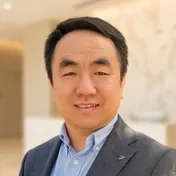
Marcus Xue, Ph.D.
Founding Scientific Director
Leads the Institute: research strategy, AI evaluation methods, publications, and research partnerships. As a postdoctoral researcher at Stanford University, he used field experiments, standardized-patient studies, and causal inference to study the quality of health care, early childhood development, and mental health in underserved communities.
Prof. Yaobo Shi
Director of Empirical Research
Leads empirical design and methods. Professor of Economics and doctoral supervisor at Xi’an University of Technology, he directs Parenting the Future, a randomized-trial study of disadvantaged children’s development in rural China, and has spent two decades studying how public policy shapes people’s lives.
Jing Zhang
President, BrightUp Kids
Leads community partnerships, program operations, and participant engagement. As President of BrightUp Kids, she runs its programs with public libraries and families, including the Bay Area reading club she co-founded and Inclusive Chinese Families. A former editor in China, she holds an MBA from Santa Clara University.
Partner with us
We welcome collaborations with researchers, healthcare organizations, community groups, and funders. Partnerships begin with a clear research question, defined responsibilities, and a commitment to credible findings.
A few sentences is enough. It helps if you cover:
Who you are and the organization you work with.
The question you want to answer, or the work you want to contribute to.
What a good outcome would look like for the people involved.
A person from our team replies, usually within a few days.
BrightUp Institute is the research division of BrightUp Kids, a registered 501(c)(3) nonprofit organization, and is not a separate legal entity. BrightUp Kids is the legal party to every agreement, application, and publication. The Institute conducts research and does not provide clinical, counselling, or emergency services. If you or someone you know needs support now, contact a healthcare professional or local emergency services.